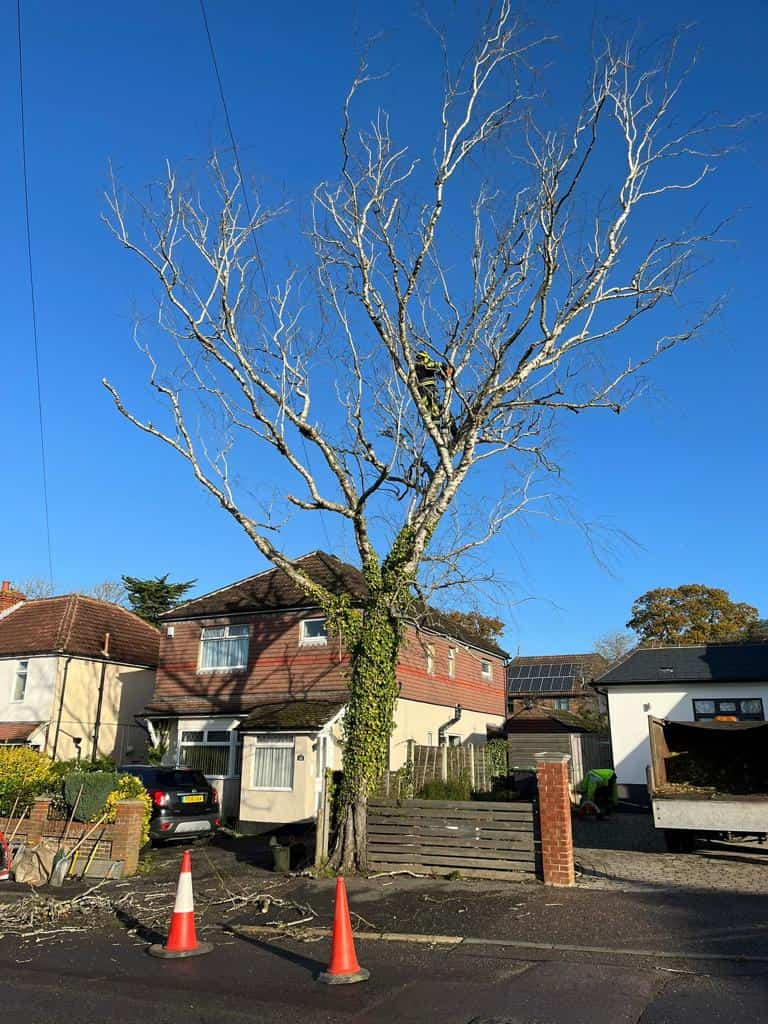
Trees add character, shade and natural beauty to a garden, but unmanaged growth can eventually create problems for homeowners. Branches may extend over paths, block natural light, interfere with garden structures or become vulnerable to damage during strong winds. Knowing when to arrange professional tree trimming helps keep your outdoor space manageable while supporting the health and structure of your trees.
For homeowners in Swanmore, Hampshire, regular attention to tree growth can help prevent minor concerns from developing into more significant maintenance issues. The right approach depends on the tree’s species, condition, size and position within the garden.
Signs Your Trees May Need Professional Trimming
Not every large tree needs pruning simply because it has grown considerably. However, certain changes can indicate that professional attention may be beneficial.
Branches Growing Too Close to Buildings
Branches that reach towards roofs, gutters, walls or sheds can cause practical problems, particularly when they rub against surfaces or restrict access for maintenance. Overhanging growth may also become more difficult to manage as the tree develops.
Professional tree trimming can help maintain suitable clearance while preserving the tree’s natural shape. The extent of the work will depend on the branch structure and how close the tree is to surrounding features.
Excessive Growth Blocking Light
A dense canopy can reduce the amount of sunlight reaching lawns, patios and planting areas. If parts of your garden have become noticeably darker as a tree has grown, selective pruning may help improve light levels.
Crown thinning involves removing selected branches throughout the canopy to reduce its density without substantially changing the tree’s overall size or shape. It is different from indiscriminately cutting back large sections of growth, which may damage the tree.
Dead, Damaged or Crossing Branches
Deadwood, cracked limbs and branches that rub against one another can affect a tree’s structure. Damaged branches may also fall, especially during periods of unsettled weather.
A professional assessment can identify which branches need attention and whether pruning is sufficient to address the concern. If a branch is hanging over a frequently used area, keep people away from the immediate space until it has been assessed.
Trees Growing Beyond Their Available Space
Some trees naturally develop broad canopies or vigorous growth that eventually becomes difficult to accommodate in a smaller garden. Branches may extend over fences, cover pathways or make nearby areas harder to maintain.
Crown reduction may be suitable in certain circumstances, allowing selected parts of the canopy to be reduced while retaining a balanced appearance. The work must be planned carefully, as cutting back too much can weaken the tree and encourage poorly attached regrowth.
Why Timing Matters When Trimming Trees
The best time to trim a tree depends on its species, health and the reason for pruning. Some maintenance can be carried out during dormancy, while other work may be appropriate at different points in the growing season.
Damaged or hazardous branches may require prompt attention regardless of the season. However, routine pruning should be planned with the tree’s growth cycle in mind to avoid unnecessary stress.
Before arranging work, consider whether the tree has recently shown signs of disease, suffered storm damage or developed unusually sparse foliage. These details can help a tree surgeon assess the most appropriate course of action.
How Professional Tree Trimming Supports Tree Health
Professional tree trimming is not simply about making a tree smaller. It involves understanding how the tree grows and selecting the right branches to remove.
Poor pruning can leave large wounds, damage the canopy or alter the tree’s natural structure. Excessive cutting may also stimulate vigorous regrowth that becomes difficult to manage later.
An experienced tree surgeon can determine whether crown thinning, crown reduction, deadwood removal or another form of pruning is suitable. The aim is to address the specific issue while retaining as much healthy growth as possible.
Regular inspections can also help identify developing problems before they become more difficult to manage. This is particularly useful when trees have grown close to buildings, garden boundaries or areas used frequently by the household.
Choosing a Tree Surgery Service in Swanmore
When an overgrown tree becomes difficult to manage, professional advice can help you understand the available options. A suitable assessment should consider the tree’s condition, its position, the surrounding garden and the reason for trimming.
LM Tree Surgery Swanmore can help homeowners in Swanmore, Hampshire, determine what type of tree maintenance may be appropriate for their outdoor space. Whether the concern involves overhanging branches, a dense canopy or damaged growth, the recommended work should reflect the tree’s individual needs.
Avoid attempting to cut large branches or work at height without suitable training and equipment. Professional tree surgery helps manage these tasks with greater care and attention to the surrounding property.
Conclusion
Overgrown trees may need professional trimming when branches interfere with buildings, reduce garden light, show signs of damage or become difficult to manage safely. Acting at the right time can help maintain the tree’s structure, support healthy growth and keep the garden more practical to use.
For homeowners in Swanmore, Hampshire, professional advice can help establish whether pruning is necessary and which method is most suitable.
If your trees have become overgrown or need attention, contact LM Tree Surgery Swanmore to discuss your requirements and arrange a suitable assessment.
Call us on: 01489 358 695
Click here to find out more about LM Tree Surgery Swanmore
Click here to complete our contact form and see how we can help with your tree’s needs.