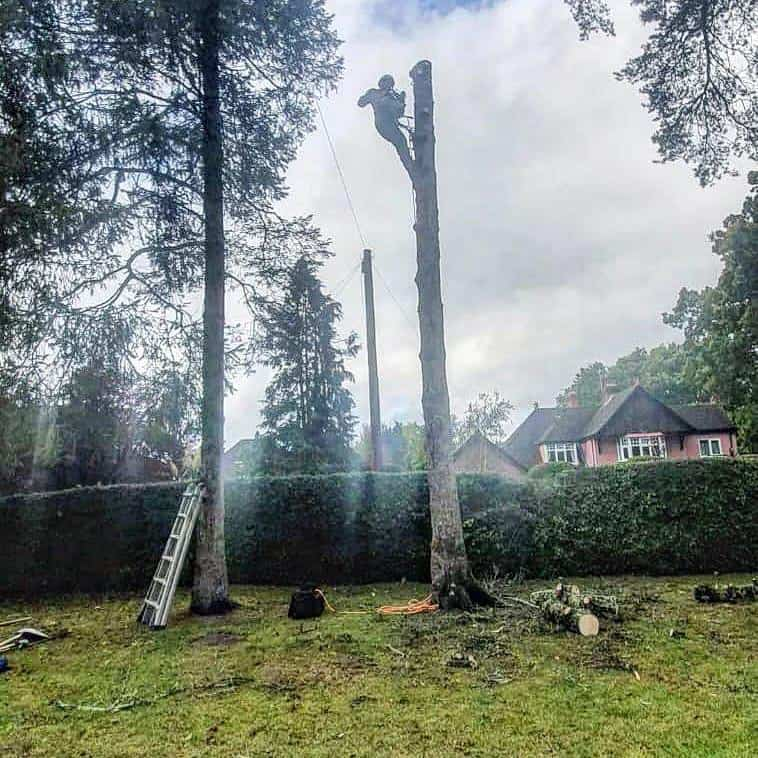
Mature trees can give a garden structure, shade and character, but they may begin to affect the surrounding space when their growth is left unmanaged. An increasingly dense canopy, low branches or extensive deadwood can influence the amount of light, moisture and usable space available below.
This does not mean that every large tree requires substantial cutting. The aim of professional tree surgery is to understand how the tree is interacting with the garden and recommend proportionate work that supports its condition while improving the surrounding environment.
How Neglected Trees Can Influence Your Garden
Trees naturally change as they mature. Their crowns become wider, branches increase in weight and roots occupy more of the surrounding soil. These changes can gradually affect lawns, borders, paths and other plants.
Possible signs that a tree needs attention include:
- Areas of lawn becoming thin or bare
- Plants struggling beneath a dense canopy
- Paths obstructed by low branches
- Excessive deadwood accumulating below the tree
- One side of the canopy becoming unusually heavy
- Branches rubbing against one another
- Large limbs extending over frequently used areas
- The garden feeling darker or more enclosed
A professional assessment can determine whether these problems are connected to the tree and which form of management would be appropriate.
Dense Canopies Can Restrict Natural Light
An overgrown canopy may cast heavy shade across lawns, flower beds and seating areas. Plants below can struggle when insufficient light reaches their leaves, while grass may become sparse in the darkest parts of the garden.
Crown thinning can selectively remove smaller branches throughout the canopy, allowing more light to pass through without substantially changing the tree’s overall dimensions. Crown lifting may also improve light and access by removing selected lower branches.
Pruning should remain balanced. Excessive removal can weaken the tree’s natural form and encourage vigorous, poorly attached regrowth.
Low Branches Can Reduce Usable Space
Branches that once sat comfortably above the garden may become intrusive as they lengthen and develop more secondary growth. They can obstruct paths, interfere with garden maintenance or make seating and play areas feel confined.
Carefully raising the lower canopy can provide practical clearance while retaining the main structure of the tree. The amount removed must suit the species and maturity of the tree, as large lower branches often make an important contribution to stability.
Trees Can Compete with Nearby Plants
Tree roots naturally absorb water and nutrients from the soil. Beneath a large, established tree, smaller plants may have to cope with both shade and increased competition.
Tree surgery cannot remove this competition completely without affecting the tree. However, appropriate canopy management may improve light and rainfall penetration, helping gardeners choose and maintain planting that is better suited to the conditions.
Understanding the cause of poor growth is important before assuming that pruning alone will transform the area.
Overextended Branches Can Dominate the Garden
A tree with long, unbalanced limbs may occupy more space than necessary and place uneven weight across its canopy. This can happen because of competition for light, previous damage or irregular pruning.
Crown reduction or professional reshaping can shorten selected branches back to suitable growth points. The objective is to create better proportion and manage the spread without producing an unnatural outline.
Substantial correction may need to be completed gradually to avoid removing too much live growth at once.
Deadwood Can Affect the Area Below
Dead branches are a normal part of a tree’s development, but larger or extensive deadwood should be assessed. Falling twigs and branches can make the area below difficult to use and increase the amount of debris requiring removal.
Deadwood removal clears defective growth from the canopy and allows the remaining structure to be inspected more clearly. It can also improve the tree’s appearance without reducing healthy branches unnecessarily.
Leaf and Twig Build-Up Can Obstruct Drainage
Trees naturally shed leaves, seeds and small branches. When a canopy extends over gutters, drainage channels, paths or patios, this material can accumulate in inconvenient areas.
Selective pruning may reduce some of the overhang, but it will not stop natural shedding. The aim should be to achieve sensible clearance while preserving a balanced canopy rather than cutting the tree solely to eliminate routine garden maintenance.
Crowded Growth Can Conceal Structural Problems
Dense canopies can make it difficult to see crossing branches, weak forks, damaged limbs or areas of decay. These issues may continue developing unnoticed until a branch begins to fail or the tree becomes visibly unbalanced.
Professional inspection identifies which branches need attention and which should remain. Removing crossing, rubbing or poorly attached growth at an appropriate stage can help guide the canopy towards a stronger structure.
Poor Previous Pruning Can Create Further Problems
Harsh cutting or repeated removal from the same height can stimulate clusters of fast-growing shoots. These may form a dense outer canopy, block more light and create weak attachments that require future management.
Corrective tree surgery can begin restoring a more natural framework by selecting suitable branches and gradually reducing unwanted regrowth. This process may require more than one maintenance visit, particularly where the tree has been poorly managed for several years.
Not Every Garden Problem Is Caused by Trees
Shaded lawns, weak plants and damp areas can have several causes, including soil conditions, drainage and unsuitable planting. Tree surgery should only be recommended where it will provide a genuine benefit.
A professional tree surgeon will consider the tree’s health, species, structure and surroundings before suggesting pruning. In some cases, modest work may be enough; in others, changing the planting beneath the tree may be the more effective approach.
Conclusion
Neglected trees can affect the rest of a garden by restricting light, reducing clearance, competing with nearby plants and allowing dead or unbalanced branches to develop. Appropriate tree surgery can improve these conditions while preserving the tree’s natural shape and value.
LM Tree Surgery Swanmore provides professional tree care in Swanmore, Hampshire. If an overgrown or poorly maintained tree is affecting how you use your garden, contact the team to arrange an assessment and discuss a suitable approach.
Call us on: 01489 358 695
Click here to find out more about LM Tree Surgery Swanmore
Click here to complete our contact form and see how we can help with your tree’s needs.