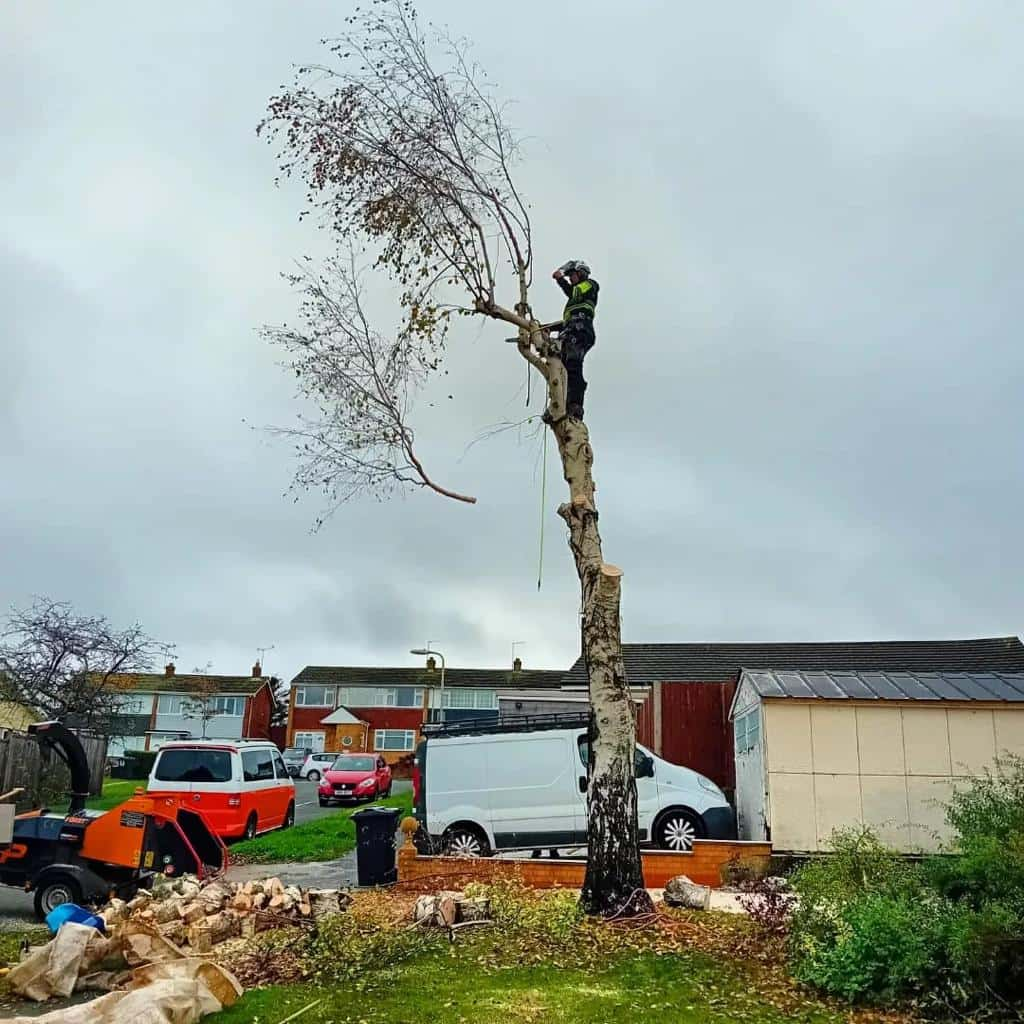
Reducing the size of a tree canopy can help manage excessive growth, improve clearance and make a tree more suitable for its surroundings. However, it is not simply a matter of cutting back branches until the tree looks smaller. The work needs to be carefully planned to protect the tree’s health, maintain its natural shape and achieve the intended result.
Before any canopy reduction takes place, several important factors should be assessed. For property owners in Swanmore, Hampshire, understanding these considerations can help ensure that tree work is appropriate for the individual tree and its surroundings. LM Tree Surgery Swanmore provides professional tree care, helping homeowners make informed decisions about managing mature and overgrown trees.
The Tree’s Overall Health and Condition
The first consideration should be the tree’s current health. A healthy tree may respond well to carefully planned canopy reduction, whereas one that is already weakened or declining may require a different approach.
A professional assessment should look for signs such as:
- Dead or dying branches within the canopy.
- Cracks, splits or damage to major limbs.
- Fungal growth or visible signs of decay.
- Areas of missing or damaged bark.
- Sparse foliage or unusual changes in leaf growth.
These symptoms can indicate underlying problems that may affect how much pruning the tree can tolerate. Reducing the canopy without understanding its condition could place additional stress on an already weakened tree.
The Tree Species and Natural Growth Pattern
Different tree species respond differently to pruning. Some tolerate selective canopy reduction reasonably well, while others are more sensitive to substantial branch removal.
The tree’s natural growth habit should also be considered. Some species naturally develop broad, spreading crowns, while others grow upwards with a more compact structure. Understanding these characteristics helps determine how the canopy can be reduced without leaving the tree with an unnatural appearance.
A suitable pruning plan should work with the tree’s natural form rather than forcing it into a shape that may be difficult to maintain.
The Amount of Canopy That Needs to Be Removed
One of the most important decisions is how much of the canopy should be reduced. Removing too much foliage in one operation can interfere with the tree’s ability to produce energy and maintain healthy growth.
The assessment should establish which branches genuinely need attention and how much reduction is necessary to achieve the intended outcome. This may involve shortening selected branches, reducing the overall spread or addressing particular sections of the canopy.
The aim should be to make a measured reduction while retaining enough healthy foliage and suitable branch structure. Heavy or indiscriminate cutting should be avoided.
The Position of the Tree and Its Surroundings
The location of a tree has a significant influence on the type of canopy work required. A tree growing close to a house may need attention to maintain clearance from the roof, walls and gutters. In a garden, excessive growth might restrict access, reduce natural light or interfere with nearby planting.
Before work begins, a tree surgeon should consider:
- The distance between branches and nearby buildings.
- Whether the canopy overhangs paths, driveways or frequently used areas.
- The position of fences, garden structures and other obstacles.
- The amount of available space for the tree’s natural growth.
- Whether branches are interfering with neighbouring trees or plants.
For properties in Swanmore, Hampshire, assessing these surroundings helps ensure that canopy reduction addresses practical concerns without creating unnecessary changes to the garden.
The Tree’s Branch Structure
The arrangement and condition of the main branches should be examined before any reduction is planned. Crossing branches, weak attachments and limbs showing signs of damage may need particular attention.
A professional tree surgeon will consider how the branches connect to the main framework and whether removing or shortening certain sections could affect the tree’s balance.
Good canopy management should preserve a strong, well-distributed structure. This is important because poorly planned cuts can leave large wounds, encourage unsuitable regrowth or create an unbalanced appearance.
The Purpose of the Canopy Reduction
It is also important to establish why the tree needs reducing. The intended outcome will influence the recommended technique and the areas of the canopy that require attention.
Common reasons include:
- Reducing excessive height or width.
- Improving clearance around buildings and access routes.
- Allowing more natural light into a garden.
- Managing branches that have become poorly positioned.
- Maintaining a tree within the space available to it.
Being clear about the objective helps prevent unnecessary cutting. In some situations, selective pruning or crown thinning may be more suitable than reducing the overall canopy.
Choosing the Right Time for Tree Work
Timing should also form part of the assessment. The most suitable period for pruning depends on the tree species, its condition and the type of work required.
Some trees are best pruned during particular stages of their growth cycle, while others may need attention sooner because of damaged or hazardous branches. Seasonal considerations can also affect how the tree responds to pruning.
Rather than applying the same schedule to every tree, a professional assessment should determine when the proposed work is most appropriate.
Why Professional Assessment Matters
Canopy reduction requires more than identifying branches that appear too long. It involves understanding tree biology, branch structure, growth patterns and the conditions surrounding the tree.
An experienced tree surgeon can identify which parts of the canopy need attention, recommend an appropriate level of reduction and carry out the work with care. This helps avoid excessive pruning and supports the tree’s long-term condition.
LM Tree Surgery Swanmore can assess trees that have become too large for their surroundings and advise on suitable canopy management for properties in Swanmore, Hampshire.
Conclusion
Before reducing the size of a tree canopy, it is essential to consider the tree’s health, species, branch structure, surroundings and the reason for the proposed work. These factors help determine the most suitable pruning method and how much of the canopy should be removed.
If a tree on your property in Swanmore has become overgrown or is affecting the space around it, contact LM Tree Surgery Swanmore for professional advice. A carefully assessed approach can help maintain the tree’s appearance, structure and suitability for its surroundings.
Call us on: 01489 358 695
Click here to find out more about LM Tree Surgery Swanmore
Click here to complete our contact form and see how we can help with your tree’s needs.